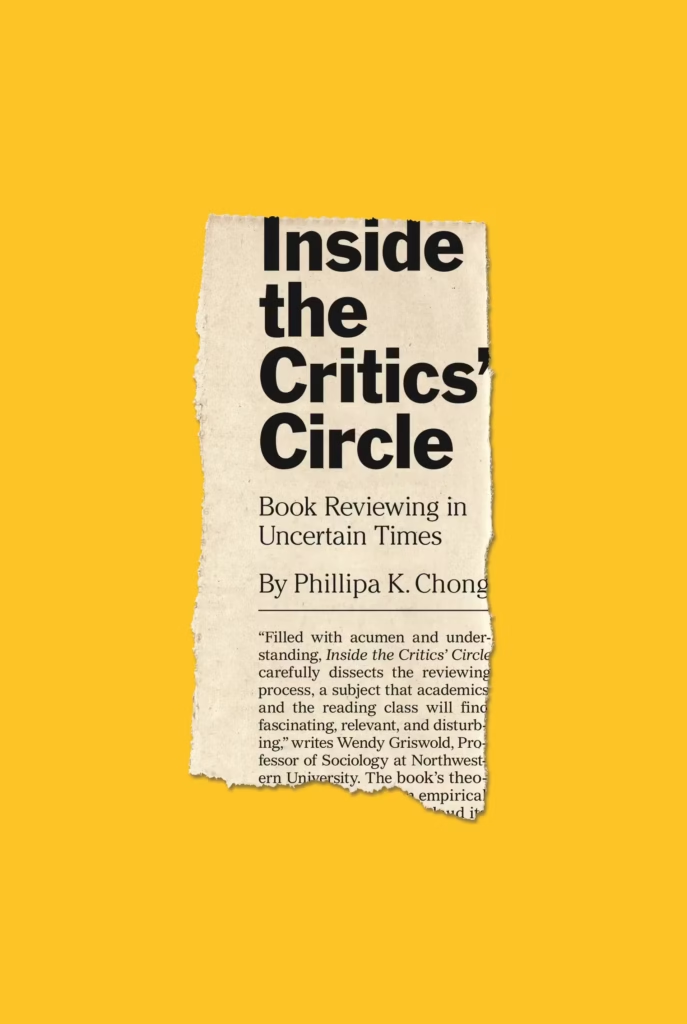
As 2025 draws to a close, literary critics across major publications have reached a rare consensus: this was a year that rewarded seriousness. Lists compiled by outlets such as The Week and others highlight books that resisted trend-chasing and instead committed to intellectual rigor, narrative risk, and moral complexity.
What stands out in this year’s critics’ selections is what’s missing. There’s less fixation on celebrity-authored titles, fewer algorithm-optimized self-help releases, and a noticeable decline in disposable “airport reads.” In their place are books that demand time — layered novels, deeply reported nonfiction, and essays that refuse easy conclusions.
Many of the chosen works confront systemic instability: collapsing institutions, climate anxiety, misinformation, and the psychological cost of living in permanent uncertainty. But critics have been careful to distinguish between books that exploit these themes for urgency and those that interrogate them thoughtfully. The latter dominate the lists.
Another defining feature of 2025’s best books is tonal maturity. Rage has given way to precision. Instead of shouting, these books argue. Instead of comforting, they challenge. Reviewers repeatedly praised authors who trusted readers to sit with ambiguity rather than spoon-feeding moral clarity.
Importantly, several debut and mid-career writers appear alongside established names, suggesting that the literary ecosystem — often accused of stagnation — is still capable of renewal when gatekeepers prioritize quality over marketing budgets. Critics have framed this as a corrective year, one that quietly pushed back against performative publishing.
For readers, these lists function as more than recommendations. They are filters — tools to reclaim attention from noise. In a year oversaturated with content, critics acted as editors for the culture itself, reminding audiences that not everything worth reading is immediately gratifying.
The message from 2025’s critics is blunt but necessary: good books don’t chase relevance. They outlast it.