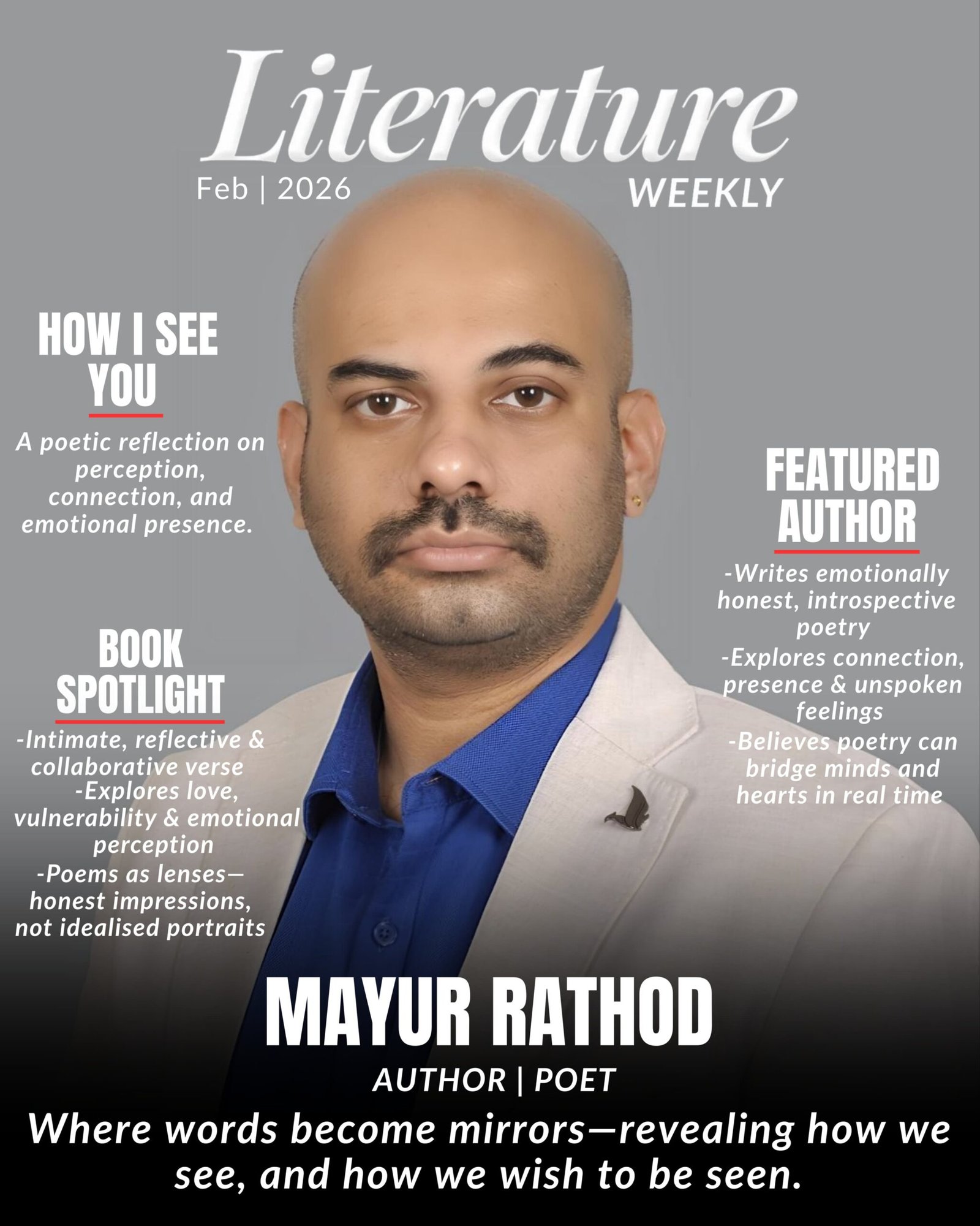
In an age where expression is often immediate and excessive, poetry that values quiet observation feels increasingly rare. by emerges with a composed literary confidence—an intimate collection that understands one of poetry’s oldest truths: to see another person fully is, in itself, an act of creation.
Rather than announcing itself as a grand artistic undertaking, the book unfolds organically. It grows poem by poem, shaped by lived interaction rather than literary architecture. The result is a collection that feels immediate yet thoughtful, personal yet quietly universal.
At its heart, How I See You is a study in perception. Each poem operates as a lens—clear, unembellished, and emotionally attentive. These are not idealised portraits but honest renderings: the brightness hidden within a passing phrase, the emotional undertow of silence, the fragile beauty embedded in everyday companionship. Rathod does not attempt to perfect the human figure; he simply observes it with care.
Poetry as Recognition
The intellectual strength of the collection lies in its refusal to dramatise intimacy. Instead, it proposes something subtler—that relationships are sustained less by declaration than by attention. Through themes of admiration, vulnerability, curiosity, and quiet joy, the poems suggest that being understood is among life’s most profound experiences.
Words here function almost as reflective surfaces. They reveal not only how one person is perceived, but how the act of perceiving reshapes the observer as well. In this reciprocal gaze, poetry becomes collaborative—even when authored by a single voice.
Readers may find themselves gently drawn into their own memories of connection: someone who recognised them without explanation, or whom they learned to see more deeply over time.
The Discipline of Restraint
What elevates How I See You is its emotional discipline. Rathod demonstrates a mature awareness that poetry need not heighten its volume to deepen its impact. Silence is allowed to breathe; pauses carry meaning. The poems trust suggestion over proclamation.
Such restraint lends the collection a reflective cadence. It is a book best approached slowly—less consumed than inhabited. The emotional resonance arrives gradually, often lingering beyond the lines themselves.
In contemporary poetry, where urgency sometimes eclipses nuance, this composure feels particularly distinguished.
The Mind Behind the Voice
Professionally an accomplished Information Technology consultant, Rathod brings analytical clarity to his creative practice. Holding an MBA in Applied Finance and Leadership & Strategy from Narsee Monjee Institute of Management Studies, Mumbai, he advises organisations on digital transformation—work that demands structure, foresight, and precision.
Yet alongside this professional rigor exists a deeply reflective temperament. His affinity for literature and his inclination toward the restorative calm of nature subtly inform his poetic sensibility, grounding the work in attentiveness rather than abstraction.
How I See You is his second book, following Echoes of the Soul, which received both the Legacy of Literature Award (2025) from The Literature Times and the 21st Century Emily Dickinson Award (2025). These recognitions point not merely to productivity, but to a developing literary voice marked by emotional intelligence and composure.
An Intimate Contribution to Contemporary Poetry
Ultimately, How I See You is less concerned with answering emotional questions than with honouring them. It reminds us that intimacy often resides in the smallest recognitions—in noticing without possession, in understanding without correction.
This is poetry that listens before it speaks.
For readers drawn to contemporary verse that privileges sincerity over spectacle and perception over performance, Rathod’s collection offers a refined and quietly affecting experience. It stands as a reminder that amid the noise of modern life, the simple act of truly seeing another person remains one of our most enduring forms of grace.