


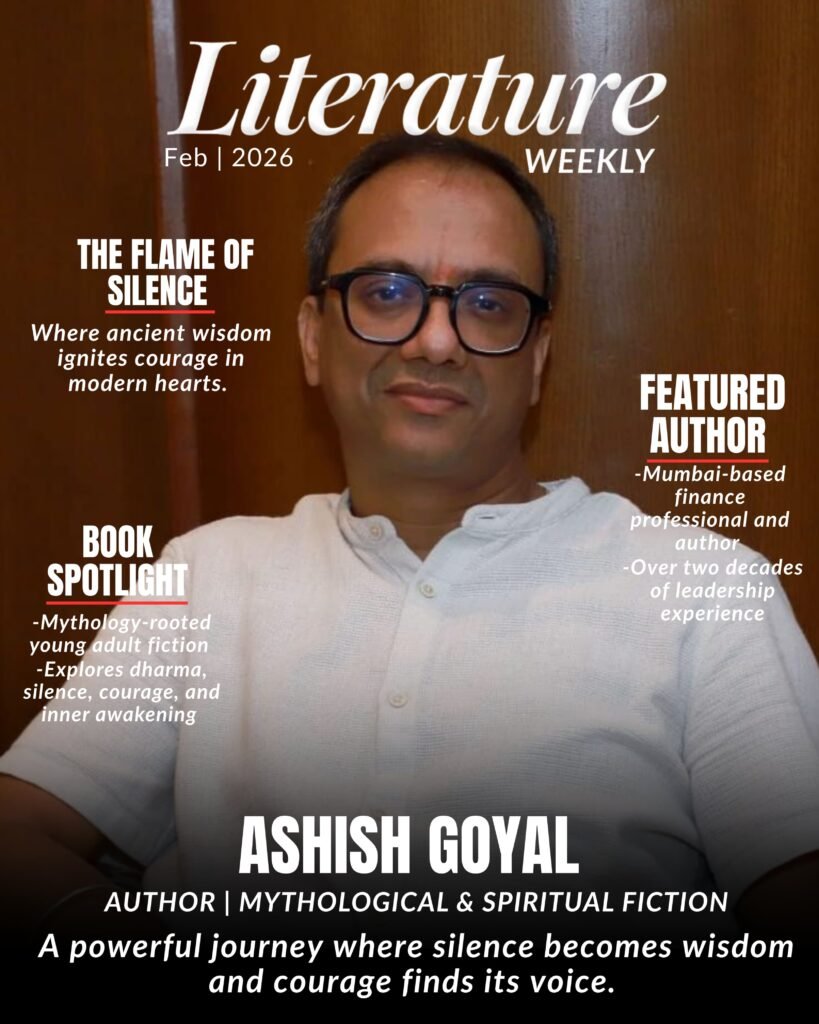
In the evolving landscape of modern Indian writing, few authors attempt to engage scriptural tradition with both intellectual discipline and narrative accessibility. Ashish Goyal positions himself within this thoughtful space—bridging classical philosophy and contemporary reflection with measured clarity.
A Mumbai‑based finance professional by training, Goyal brings structural precision and analytical depth to his literary work. His writing reflects a deliberate effort to interpret Indian spiritual texts not as distant relics, but as living frameworks capable of addressing present‑day dilemmas.
Mythology Reimagined for Young Readers
Goyal first established his narrative voice through his mythology‑rooted young adult fiction series, including and .
These novels weave contemporary storytelling with parallel strands drawn from the Shrimad Bhagavatam, creating a layered reading experience. Rather than retelling mythology in isolation, the series situates ancient wisdom alongside modern identity, ethical struggle, and moral growth. A third instalment currently in development signals the continuity of this thematic universe.
From Fiction to Reflective Non‑Fiction
With , Goyal transitions from narrative fiction to spiritual non‑fiction. Here, he revisits the Bhagavatam not as commentary in the academic sense, but as a contemplative dialogue with the present.
The text reframes silence, awareness, and inner alignment as active spiritual disciplines rather than abstract ideals. Goyal’s prose remains restrained and deliberate, avoiding ornamental mysticism. Instead, he favours clarity—allowing philosophical depth to emerge through structured reflection rather than rhetorical flourish.
A Measured Literary Philosophy
Across both fiction and non‑fiction, Ashish Goyal’s work shares a consistent intention: to retain the philosophical integrity of Indian scriptural thought while making it emotionally and intellectually accessible for modern readers.
His background in finance subtly informs this approach. The writing is organised, layered, and grounded—demonstrating that spiritual inquiry need not abandon analytical rigour. In doing so, Goyal contributes to a growing body of contemporary Indian literature that treats tradition not as nostalgia, but as ongoing conversation.
🔗 Book Link:
https://amzn.in/d/gLFzqX8