


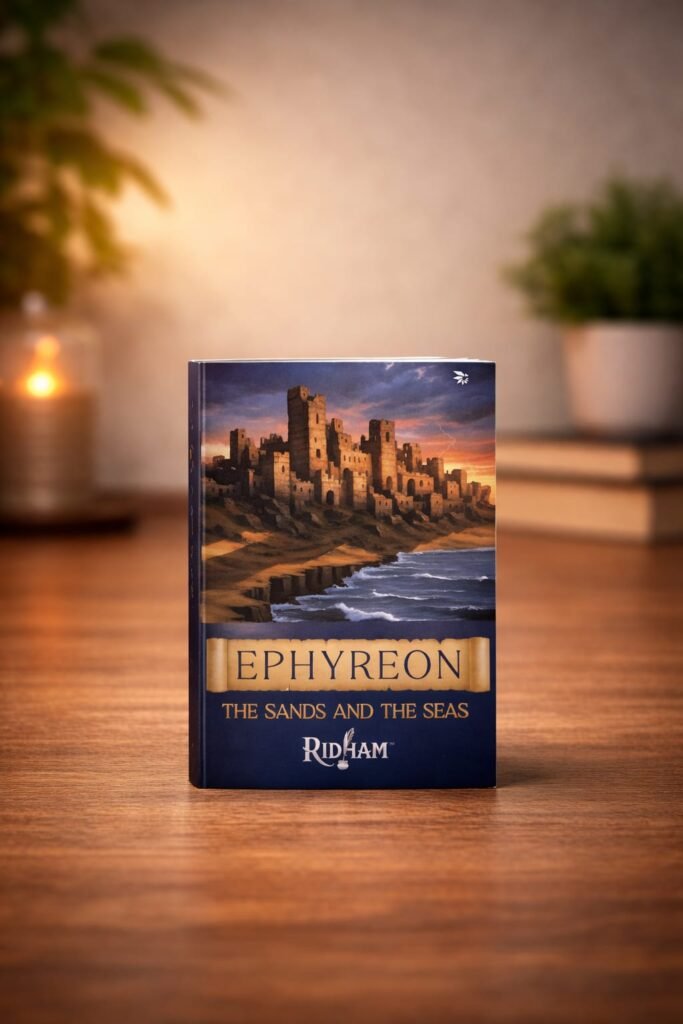
Epic fantasy has always depended on worlds that feel both distant and emotionally immediate — places where magic, courage, and moral conflict intersect. , the debut novel by , embraces this tradition with notable conviction, presenting a universe shaped by peril, prophecy, and the enduring pull of heroism.
Set in the mystical realm of Carth, the novel opens on a civilisation overshadowed by the oppressive rule of the Necrogaards, whose hunger for power has stripped the land of magic and fire. The stakes are established early: a world on the brink, a fragile hope, and a looming darkness that threatens every living soul.
A Quest Forged in Peril
At the heart of the narrative lies the capture of Evra, the Mother of Souls — a figure whose fall signals both spiritual and political collapse. Her rescue becomes the catalyst for a sweeping journey across deserts and forsaken seas, undertaken by an unlikely yet compelling fellowship: the sage‑warrior Nilander, his compassionate son Ephyreon, the enigmatic shapeshifter Carbon, and the fallen Tarragon Garuda.
Their path is marked by monstrous serpents, hidden dangers, and shadowed conspiracies, each trial expanding the scope of the world while tightening the emotional bonds between its characters. Yet the novel’s momentum does not rely solely on spectacle. Beneath the battles and strategy runs a quieter current — the idea that friendship itself can become a form of magic when hope appears diminished.
World-Building with Patience
What distinguishes Ephyreon – The Sands and the Seas is the sense of deliberation behind its creation. Ridham reportedly spent nearly nine years designing this universe before completing the first instalment, and that investment is evident in the layered geography, mythic undertones, and narrative scale.
The landscapes — from scorching deserts to treacherous waters — function not merely as backdrops but as extensions of the story’s emotional climate. Loss, endurance, and awakening mirror the terrain itself, giving the novel a cohesion that fantasy readers often seek.
Importantly, the book balances awe with accessibility. While the mythology is expansive, the emotional stakes remain clear, allowing readers to anchor themselves within the characters’ struggles.
A Classic Theme, Renewed
Fantasy frequently returns to the idea that when darkness gathers, heroes must rediscover their strength. Ridham honours this classic structure while grounding it in relationships — between parent and child, allies and outcasts, belief and doubt. Magic here is not only a force of power but also a symbol of renewal, suggesting that what is lost can sometimes be reclaimed through courage and unity.
The result is a narrative driven as much by emotional resonance as by adventure.
The Imagination Behind the Novel
A native of New Delhi, Ridham grew up immersed in fantasy and science fiction — nourished by films, television, and superhero comics. It was during the reading of a fantasy novel in a friend’s basement that the impulse to build a world of his own first took hold. That early spark matured into a long creative pursuit, culminating in this debut.
Such origins matter because they signal a writer shaped by devotion to the genre rather than passing fascination. Ephyreon – The Sands and the Seas reflects that dedication: it is the work of an author willing to invest time in architecture before unveiling the story.
A Promising Beginning
As the opening movement of what appears poised to become a larger saga, the novel announces Ridham as a writer attentive to scale, atmosphere, and emotional stakes. It invites readers into a realm where danger is vast but hope persists — where magic may have faded, yet the will to restore it endures.
For readers drawn to immersive worlds, fellowship-driven quests, and narratives where courage emerges under pressure, Ephyreon – The Sands and the Seas offers a confident and engaging entry point — one that suggests the journey ahead may be as expansive as the universe it introduces.