


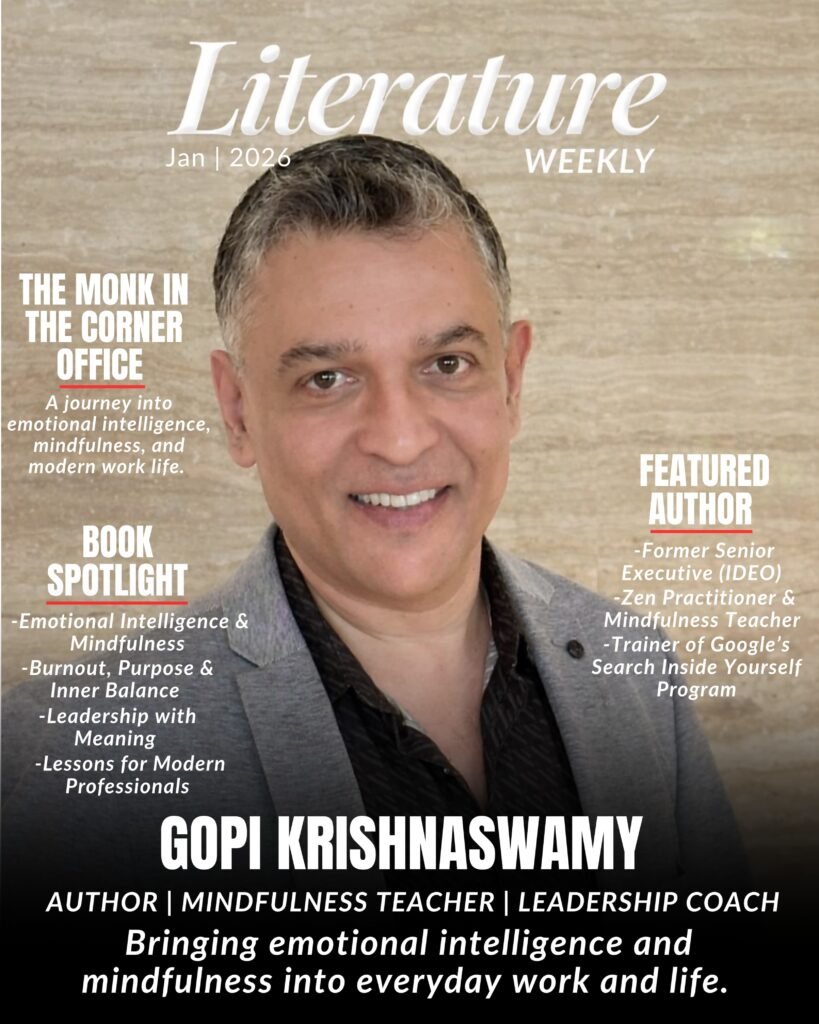
In an era where burnout is increasingly normalized and emotional exhaustion is often masked as ambition, offers a reflective and grounded examination of what it means to succeed without losing one’s inner balance. Rather than positioning emotional intelligence and mindfulness as corporate performance tools, the book treats them as essential human capacities—quietly transformative when applied with awareness and intention.
Written by , the book adopts a fictional narrative to explore deeply practical ideas. Its protagonist, Sid, is a young professional outwardly thriving yet internally depleted by the pressures and contradictions of modern corporate life. Disillusioned by the rewards of a high-stress career, Sid embarks on a motorcycling journey in search of peace. What he encounters instead is Krishna—an unassuming yet incisive teacher whose insights challenge Sid’s understanding of success, identity, and fulfillment.
The choice of narrative fiction is deliberate and effective. By embedding its ideas within lived experience rather than abstract frameworks, the book avoids the prescriptive tone that often characterizes self-help literature. Emotional intelligence emerges not as a skill to be optimized, but as an ongoing practice of attention—toward one’s thoughts, emotions, motivations, and habitual reactions. Mindfulness, in this context, is not presented as withdrawal from ambition, but as a means of engaging with work and life more consciously.
A notable strength of The Monk in the Corner Office is its restraint. The book does not promise transformation or quick solutions. Instead, it invites reflection—encouraging readers to examine the assumptions that govern their professional lives. Success is not rejected, but redefined to include inner stability, ethical clarity, and sustainable engagement. The lessons offered through Krishna are understated, often emerging through dialogue and observation rather than instruction.
The author’s perspective lends credibility to this approach. Krishnaswamy’s background spans both corporate leadership and contemplative practice. Formerly a Managing Director at IDEO, he later trained extensively in mindfulness, including living at Thich Nhat Hanh’s monastery in Thailand. He is also a teacher of the Search Inside Yourself program developed at Google and has worked globally at the intersection of mindfulness, emotional intelligence, and leadership. This dual grounding allows the book to speak fluently to professional audiences without resorting to jargon or spiritual abstraction.
While the narrative centers on a young professional, the book’s relevance extends beyond early career stages. It will resonate with leaders, managers, and individuals at any point who are questioning the sustainability of contemporary work culture. Its prose is accessible yet thoughtful, making it suitable for readers new to mindfulness as well as those already familiar with reflective practices.
Ultimately, The Monk in the Corner Office distinguishes itself through integration rather than innovation. It does not seek to redefine emotional intelligence or mindfulness, but to situate them meaningfully within modern professional life. Its value lies in its quiet insistence that attention, awareness, and emotional clarity are not luxuries—but foundations for both effective leadership and a well-lived life.