
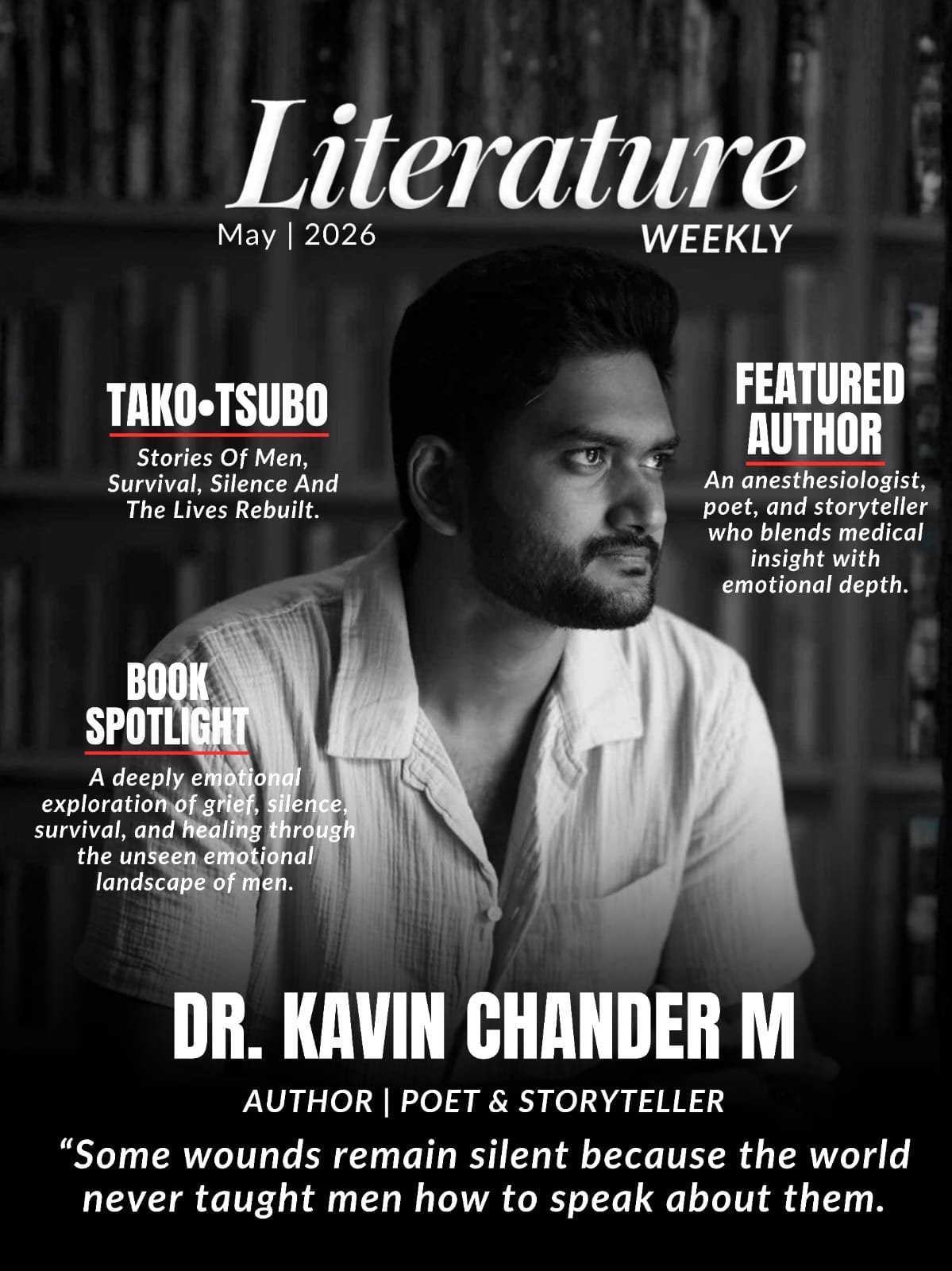
In Takotsubo, Dr. Kavin Chander M explores a space literature often avoids—the inner lives of men shaped by grief, restraint, and emotional silence. The book does not soften this experience or translate it into something comfortable. Instead, it stays with it, examining how silence forms and what it costs.
The Language of Unspoken Pain
At the center of the book lies a kind of pain that rarely finds expression. This absence does not come from rarity, but from conditioning. Men learn early to suppress vulnerability, especially when faced with loss. The narrative exposes this reality without argument—it shows how grief persists when language fails.
Where Emotion Meets the Body
The title Takotsubo points toward a condition where emotional shock manifests physically. This connection between body and feeling shapes the work throughout. Dr. Kavin, an anesthesiologist, brings precision to this exploration. He observes pain rather than dramatizing it, allowing its impact to emerge through control and clarity.
Survival Without Resolution
The book does not focus on events; it focuses on internal states. It traces how grief settles, alters perception, and reshapes identity over time. The characters do not break outwardly. They continue, rebuild, and function. However, the narrative makes one thing clear—continuation does not equal healing.
The Weight of Restraint
Dr. Kavin writes with discipline. He avoids over-explanation and lets silence carry meaning. Emotion appears in measured, deliberate ways, which strengthens the text’s intensity. What remains unsaid holds as much weight as what appears on the page.
A Study in Endurance
Takotsubo does not offer closure or easy catharsis. It presents grief as something that stays—something people carry rather than resolve. In doing so, the book reframes survival. It becomes not recovery, but endurance shaped by what cannot be fully expressed.
What makes the work linger is not what it declares, but what it refuses to resolve. It leaves the reader with an awareness of lives shaped quietly by loss—lives that continue, not because they have healed, but because they have learned to exist alongside what remains unresolved.